
Pelvic Organ Prolapse
Feel like something’s not sitting right down there? let’s talk!
The Pill — What Every Woman Deserves to Know
Clear, honest answers about oral contraceptive pills — written for you, not for a textbook.
Eating healthy during pregnancy is one of the most important ways to support your baby’s growth and your own well-being. Good nutrition does not need expensive foods or complicated diets. It simply means choosing everyday meals that give steady energy, keep you strong, and help your baby develop safely.
The Basics
What is pelvic organ prolapse?
Pelvic organ prolapse happens when one or more of your pelvic organs- such as the womb (uterus), bladder, or bowel- slip down and press into your vagina. You might feel like something is “coming down” or a heaviness inside. This can feel worrying, but it is a common condition, especially as women get older, and help is available.
What symptoms might I notice?
Some women do not have symptoms at all. But if you do, you may notice:
- A feeling of heaviness or dragging in your lower tummy or vagina
- A lump or bulge in or coming out of your vagina
- Discomfort or pain during sex
- Difficulty with bowel movements (constipation)
- Bladder symptoms such as:
- Feeling your bladder is not emptying fully
- Needing to pass urine more often
- Leaking urine when you cough, sneeze, or exercise
If you notice a lump or these symptoms, it is important to get checked.
How It Works
Why does this happen to me?
Pelvic organ prolapse happens when the muscles and tissues that support your pelvic organs become weak.
This can happen due to many reasons, some of which include,
- Pregnancy and childbirth
- Menopause and ageing
- Being overweight
- Constipation and straining
- Having a cough for a long time (Chronic cough)
- Previous pelvic surgery (such as hysterectomy, where your womb is removed)
Different types of pelvic organ prolapse are,
Anterior vaginal wall prolapse (Cystocele)
This happens when your bladder drops down and pushes into the front wall of your vagina. You may feel a bulge in the front or notice symptoms like difficulty emptying your bladder or urine leakage.
Urethrocele
This is when the tube that carries urine out (urethra) bulges into the vagina.
It often occurs along with a cystocele and may cause leakage when you cough or strain.
Posterior vaginal wall prolapse (Rectocele)
This occurs when the rectum (lower part of the large bowel) bulges into the back wall of your vagina. You might feel a lump at the back or have difficulty with bowel movements, such as constipation or needing to strain.
Enterocele
This is when part of your small bowel drops down into the upper part of your vagina. You may feel a deep pressure or heaviness, especially when standing or straining.
Uterine prolapse
This happens when your womb (uterus) moves down into or even outside your vagina. You may feel a dragging sensation or notice a bulge coming down.
Vaginal vault prolapses
This can occur after a hysterectomy (when the womb has been removed). The top of the vagina loses support and drops down, causing a similar feeling of heaviness or bulge.
Pelvic Organ Prolapse
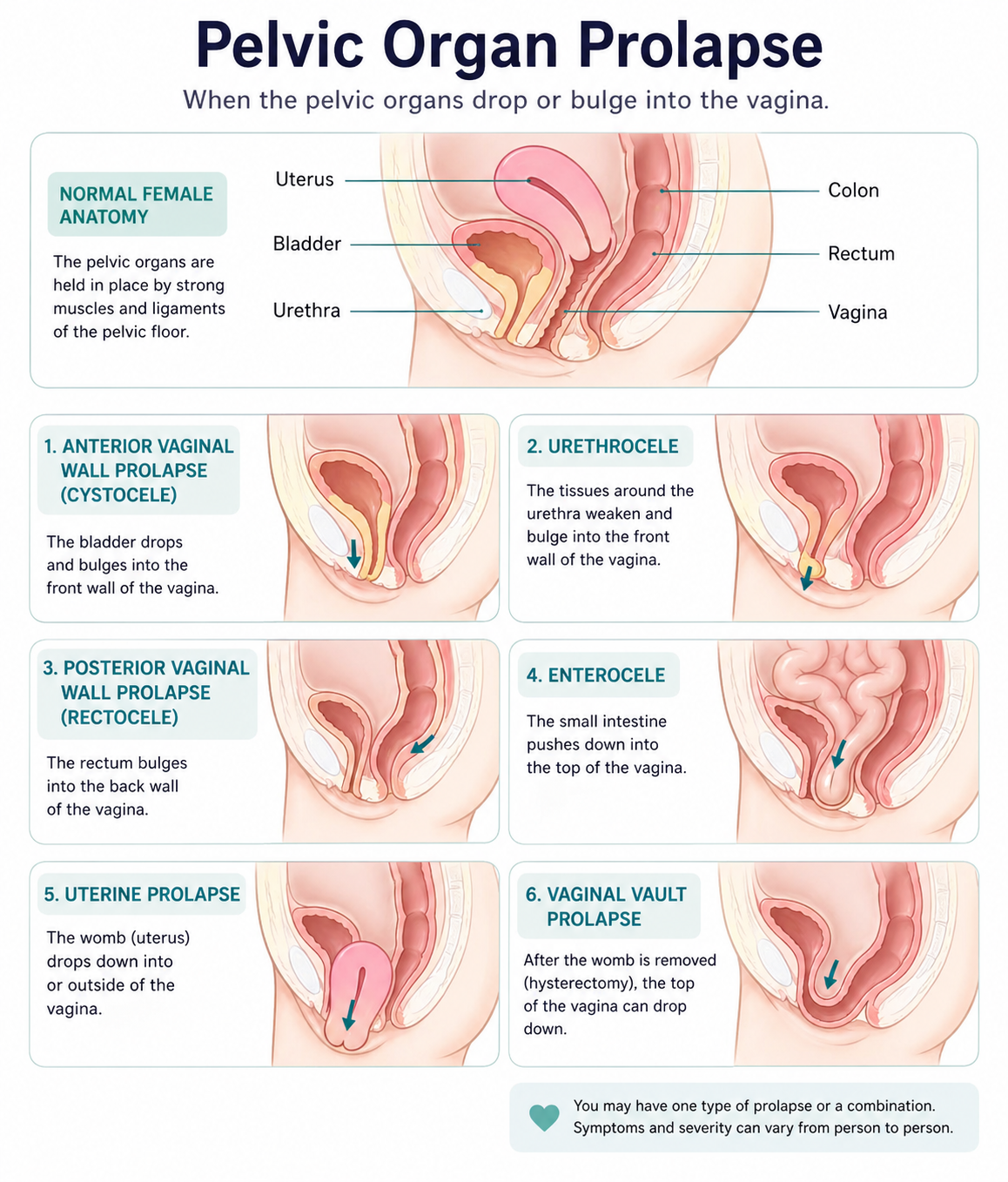
You may have just one type of prolapse or a combination of them, and symptoms can vary from mild to more noticeable.
Should I see a doctor?
You should seek help from a doctor if you feel a lump or bulge in or around your vagina or have any of the above symptoms bothering you. A doctor will talk to you about your symptoms and may do a simple pelvic examination.
What treatments are available?
Your treatment will depend on how severe your prolapse is and how much it affects your daily life. If your symptoms are mild, you may not need medical treatment right away.
If needed, options include:
- Pelvic floor exercises and physiotherapy
These strengthen your muscles and can improve symptoms - Hormone treatment
Vaginal creams, tablets, or rings may help, especially after menopause - Vaginal pessary
A small device placed inside the vagina to support and hold up the organs - Surgery
Only considered if symptoms are severe and not improving with other treatments
You and your doctor will decide what is best for you.
What can I do to help myself?
There are simple things you can start today to improve your symptoms:
Do:
- Maintain a healthy weight
- Eat high-fibre foods and drink plenty of water to avoid constipation
- Stay active with gentle exercise like walking
- Do pelvic floor exercises regularly (hyperlink to pelvic floor exercises in UI article)
Avoid:
- Heavy lifting or straining
- High-impact activities if they worsen symptoms
- Smoking, as coughing can worsen prolapse
Pelvic organ prolapse is common and manageable. You do not have to live with discomfort or embarrassment. With the right care, you can feel comfortable, confident, and in control again.
Sources & References
This leaflet is based on guidance from the National Institute for Health and Care Excellence (NICE), the Royal College of Obstetricians and Gynaecologists (RCOG), and the NHS.
It is intended as general information and does not replace personalised medical advice.
Last reviewed April 2026 · Always speak to a qualified healthcare professional before starting, changing, or stopping contraception · NHS.uk · NICE.org.uk · RCOG.org.uk