
Healthy mom, healthy baby – one simple meal at a time.
Clear, honest answers about oral contraceptive pills — written for you, not for a textbook.
Eating healthy during pregnancy is one of the most important ways to support your baby’s growth and your own well-being. Good nutrition does not need expensive foods or complicated diets. It simply means choosing everyday meals that give steady energy, keep you strong, and help your baby develop safely.
During pregnancy, your body needs better quality food, not double the quantity. A healthy meal should include whole grains like rice, vegetables, fruits, lentils, eggs, dairy, and moderate portions of fish or meat.
The ‘plate method’ is a simple and visual way to plan each meal during pregnancy without complicated calorie counting. Imagine dividing your plate into portions. A large section filled with vegetables and fruits, because these provide vitamins and minerals, as well as fibre, which helps digestion and can help prevent constipation. Eat at least 5 portions of a variety of fruit and vegetables every day. Always wash fresh fruit and vegetables carefully before consumption.
A generous section of the plate should consist of starchy foods (carbohydrates) like rice, maize, millet, oats, yams, bread or roti, and these foods should make up just over a 3rd of your plate. Instead of refined starchy (white) food, choose wholegrain or higher-fibre options such as wholewheat or brown rice.
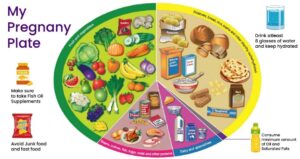
Eat some protein-rich foods every day, such as fish, meat, poultry (chicken), eggs, or lentils. Choose lean meat, remove the skin from poultry, and try not to add extra fat or oil when cooking meat.
Add a small portion of dairy foods such as milk, cheese, and yoghurt since they are important sources of calcium and other nutrients that you and your baby need.
By using the ‘plate method’, you make sure your meals are varied, colorful, and adequate—whether you’re underweight, normal weight, or overweight—and help maintain a steady, healthy intake of nutrients, ensuring you get the right balance of energy, protein, vitamins, and fibre that support both you and baby.
If you get hungry between meals, try not to eat snacks that are high in fat and/or sugar, such as sweets, biscuits, or chocolate. Instead, choose something healthier, such as small sandwiches or wholegrain bread with mashed tuna, salmon, or sardines, with salad, vegetable salad, or soup, porridge, fresh fruits, plain yoghurt with fruit, and milky drinks.
Eat regular meals—three main meals and healthy snacks if needed. Skipping meals can cause dizziness and low blood sugar.
Drinking plenty of clean water, at least 6-8 glasses throughout the day, also supports your body as your blood volume increases, and adequate hydration supports circulation and prevents constipation.
If you are underweight, your body may need more energy to support your baby. You can do this safely by adding extra healthy calories rather than sugary snacks. Including nuts, yoghurt, milk, eggs, dhal, and small portions of local fruits throughout the day can help. Eating a little more at each meal—without skipping any meals—can support steady weight gain. Your doctor will guide you on how much weight is safe for your body.
If you are overweight or obese, you do not need to “diet,” but you do need to follow a careful eating pattern. Large weight gain can increase the chance of high blood pressure, diabetes in pregnancy, and problems during birth. Choosing smaller portions, limiting fried food, reducing sugary drinks, and replacing refined snacks with fruits or yoghurt are helpful steps. It is important to eat enough, but not more than your body needs. Your doctor may also monitor your weight more closely to support your safety.
Knowing what not to eat is just as important.
A healthy eating pattern also means being mindful of food safety at home.
Small, frequent meals can help with nausea, and bland foods like rice, string hoppers, or curd may be easier to tolerate during the first trimester.
In Sri Lanka, women planning a pregnancy are advised to take folic acid before conception and continue it until about 12 weeks of pregnancy to prevent neurological defects in the baby. From 12 weeks onward, all pregnant mothers are started on iron, along with vitamin C and calcium supplementation to ensure healthy growth of the baby.
If you are anaemic, your doctor may increase the iron dose, and any other deficiencies will be treated as needed. Since calcium can block iron absorption, it is recommended to take the two at separate times—for example, calcium in the morning and iron in the evening.
In addition to eating well, it is also important to stay physically active during pregnancy to keep your body strong and healthy. For safe, simple guidance on staying fit, see our article on (backlink)……………...
Sources & References
This leaflet is based on guidance from the National Institute for Health and Care Excellence (NICE), the Royal College of Obstetricians and Gynaecologists (RCOG), and the NHS.
It is intended as general information and does not replace personalised medical advice.
Last reviewed April 2026 · Always speak to a qualified healthcare professional before starting, changing, or stopping contraception · NHS.uk · NICE.org.uk · RCOG.org.uk