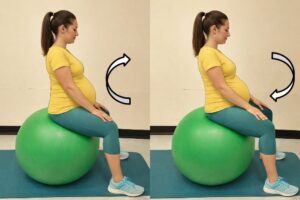
Choose activities that feel gentle, smooth, and steady, for example:
- Brisk walking – in your lane, around the temple grounds, at the beach, or in a park
- Swimming or walking in water – cools you down and is easy on joints
- Simple home exercises – marching on the spot, gentle leg and arm movements
- Pregnancy exercise or yoga classes run by a trained instructor
- Daily life movement – climbing stairs, light housework, walking to the nearby shop instead of taking a vehicle
Tips for hot weather:
- Prefer early morning or late evening when it is cooler
- Wear loose, light clothes and a good supportive bra
- Drink plenty of clean water before, during, and after exercise
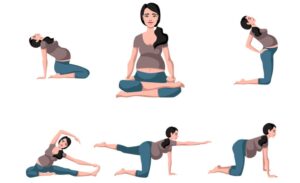
NHS
Belly wall-strengthening exercises
As your baby grows, you may notice that the hollow in your lower back increases, which can cause a backache. These exercises strengthen the belly (abdominal) muscles and may ease backache, which can be a problem in pregnancy:
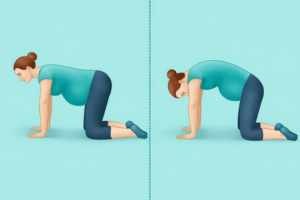
- Start in a box position (on all 4s) with knees under hips, hands under shoulders, with fingers facing forward, and abdominals lifted to keep your back straight
- Pull in your belly muscles and raise your back towards the ceiling, curling your trunk and allowing your head to relax gently forward. Do not let your elbows lock
- Hold for a few seconds, then slowly return to the box position
- Take care not to hollow your back: it should always return to a straight/neutral position
- Do this slowly and rhythmically 10 times, making your muscles work hard and moving your back carefully
- Only move your back as far as you can comfortably
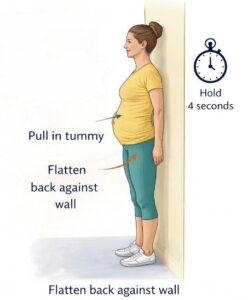
- stand with your shoulders and bottom against a wall
- keep your knees soft
- pull your belly button towards your spine, so that your back flattens against the wall: hold for 4 seconds, then release
- repeat up to 10 times
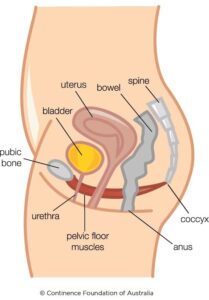 Pelvic floor exercises help to strengthen the muscles of the pelvic floor, which come under great strain in pregnancy and childbirth. The pelvic floor consists of layers of muscles that stretch like a supportive hammock from the pubic bone (in front) to the end of the backbone (spine).
If your pelvic floor muscles are weak, you may find that you leak urine when you cough, sneeze, or strain. This is quite common, and there is no reason to feel embarrassed. It’s known as stress incontinence, and it can continue after pregnancy. Once the pregnancy is over, there are many treatment options
You can strengthen these muscles by doing pelvic floor exercises. This helps to reduce or avoid stress incontinence after pregnancy. All pregnant women should do pelvic floor exercises, even if they’re young and not suffering from stress incontinence now.
How to do pelvic floor exercises:
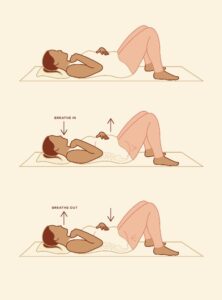
- make yourself comfortable by sitting or lying down with your knees bent
- Squeeze in and tighten the muscles around your back passage as if you were trying to stop yourself from peeing and farting, then relax the muscles
- breathe normally while doing pelvic floor exercises
- At first, try to do this exercise quickly
- then do it slowly, holding the squeezes for as long as you can before you relax: try to count to 10
- Try to do 3 sets of 8 squeezes every day: to help you remember, you could do a set at each meal
As well as these exercises, practice tightening the pelvic floor muscles before and during coughing and sneezing.